
FMCSA ELDT Enforcement Removes Over 10,000 Non-Compliant Locations From the CDL Training Registry
Federal regulators have shifted from hands-off self-certification to active enforcement of Entry-Level Driver Training (ELDT) standards, removing more than 10,000 non-compliant locations from the FMCSA Training Provider Registry while Congress considers tighter statutory controls.
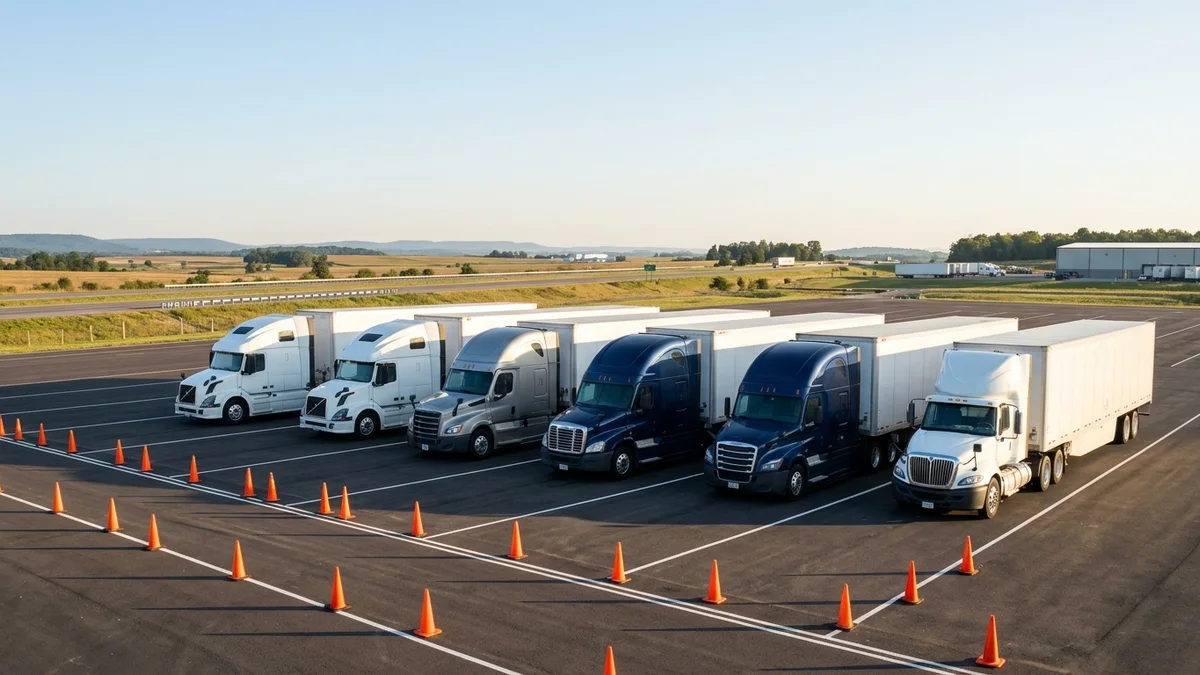
End of Hands-Off Self-Certification on the Training Provider Registry
When the Federal Motor Carrier Safety Administration (FMCSA) launched Entry-Level Driver Training (ELDT) mandates in February 2022, tens of thousands of commercial driving schools, carrier academies, and independent instructors entered the Training Provider Registry (TPR) through self-certification. In 2026, federal enforcement swung sharply in the opposite direction.
Joint Department of Transportation and FMCSA compliance audits have removed more than 10,000 non-compliant training locations from the registry. Enforcement actions targeted providers accused of issuing theory or behind-the-wheel completion certificates without delivering required range and public-road instruction, failing facility or vehicle standards, or ignoring federal record-keeping audits.
Congressional Oversight and State Non-Domiciled CDL Audits
Alongside administrative removals, lawmakers in 2026 advanced legislation—widely referred to as Dalilah’s Law—designed to harden federal oversight of CDL training providers. The proposals focus on stricter audit timelines for newly registered schools, clearer federal authority to permanently bar bad-actor operators, and tighter verification of English-proficiency and behind-the-wheel training standards.
Separately, FMCSA expanded compliance reviews of state-issued non-domiciled CDLs after program audits identified elevated error rates and licenses issued beyond lawful status timelines in multiple jurisdictions. State driver licensing agencies now face stricter verification requirements before issuing or renewing commercial credentials.
How Prospective Drivers Can Avoid Shuttered or Flagged Schools
For motor carriers and insurers, hiring a driver whose ELDT completion came from a revoked or under-investigation provider creates immediate compliance risk. For students paying $4,000 to $8,000 out of pocket—or using WIOA workforce grants—enrolling at a school that loses TPR status mid-program can stall testing at the DMV.
- Confirm the school’s exact campus address and active status on FMCSA’s official Training Provider Registry (tpr.fmcsa.dot.gov) the week you enroll.
- Ask for the written behind-the-wheel range and public-road hour schedule in your enrollment agreement; federal ELDT rules have no national minimum hour floor, so reputable community colleges and established private schools publish clear clock hours.
- Verify whether the program qualifies for WIOA grants or state workforce vouchers, which add an extra layer of state vetting.
Sources & Primary References
- FMCSA Training Provider Registry (TPR) & ELDT Rules — Federal Motor Carrier Safety Administration (U.S. DOT)
- Entry-Level Driver Training (ELDT) Regulations Overview — Federal Motor Carrier Safety Administration
- Occupational Outlook Handbook: Heavy and Tractor-Trailer Truck Drivers — U.S. Bureau of Labor Statistics
Explore Related Resources
Tuition ranges and payback timelines across U.S. programs.
How to fund training through state workforce boards.
Public college options with structured road-hour curricula.
Compare Class A and Class B options by state.